Article Summary
- BMW’s entire iX3 campaign was generated by AI — no camera, set, or film crew was used at any point.
- Bernd Koerber, BMW’s SVP for Brand, says continuity and product accuracy remain the technology’s biggest weaknesses.
- The experiment was a creative test, not a cost-cutting move — BMW wants to know when AI storytelling works, and when it doesn’t.
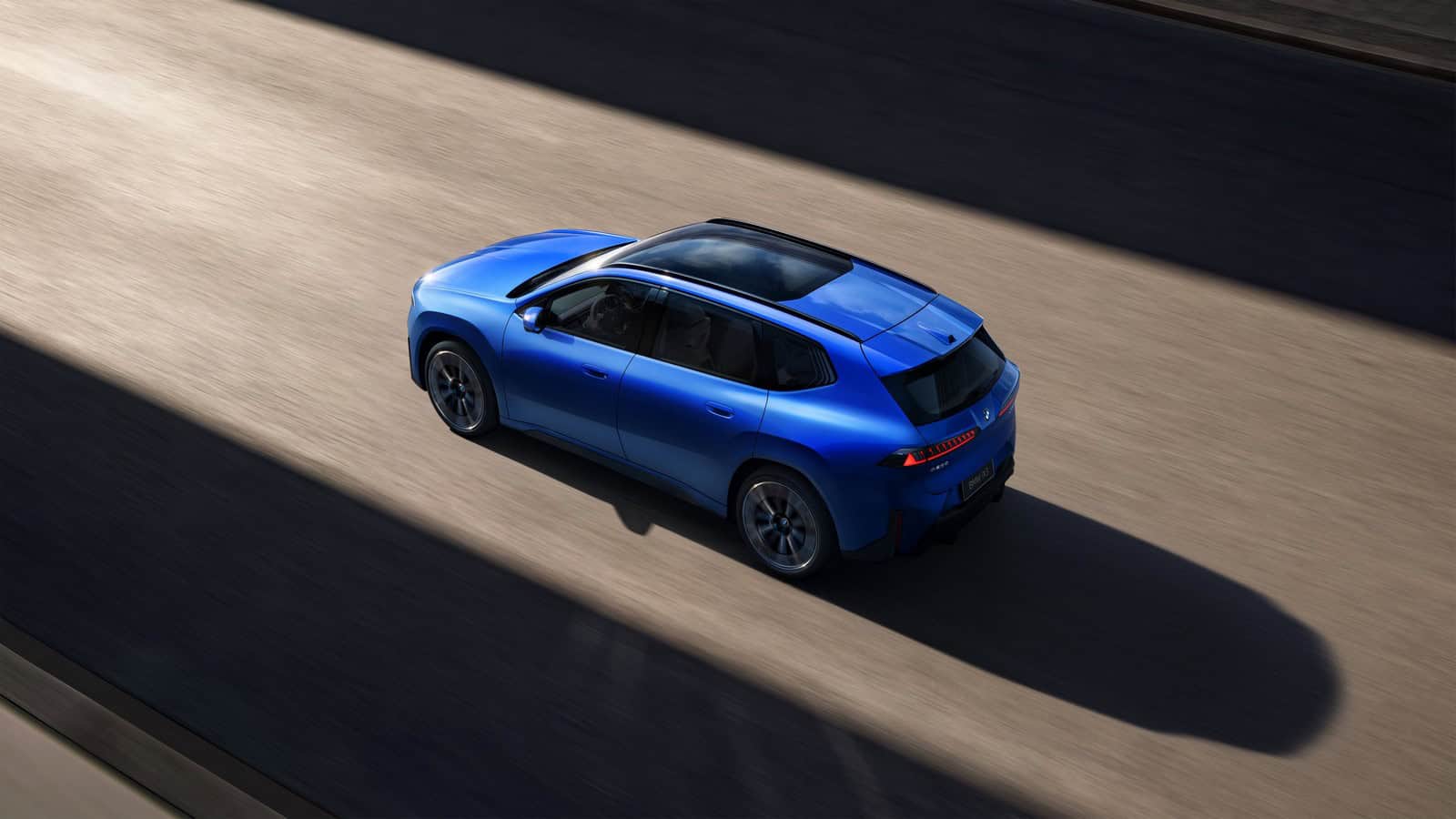
No camera. No set. No location. That’s how Bernd Koerber, BMW’s Senior VP for Brand and Product Management, opened his LinkedIn post about the brand’s latest campaign for the new BMW iX3 — and he wasn’t being dramatic. Every frame of the 30-second spot was generated by AI. The ad itself is simple. A driver gets in the car. The car drives. His beard grows. A lot. By the end he looks like he’s been off-grid for months. The point, delivered without a single word of voiceover, is that the iX3’s 805 km WLTP range means you’ll need a shave before you need a charge. It’s a good joke. More surprisingly, it was made without anyone picking up a camera.
For BMW, this was explicitly a test. Koerber was clear about that. “For us, this was not only about the end result, but about the process,” he wrote. The goal was to understand what generative AI can actually do for product storytelling — and, just as importantly, what it can’t. It’s likely that Koerber wants to emphasize the use of AI which allow the team prototype faster, explore visuals that would have been expensive or impractical to shoot, and rethink parts of the creative process. On the downside: continuity between shots is still a genuine problem, and getting the car itself to look exactly right — something that matters quite a lot when the product is the point — remains difficult.
AI is here to stay

What’s interesting is that Koerber doesn’t frame this as a cost story. He’s not saying AI is cheaper, therefore they used it. The question he’s sitting with is more nuanced: when does generative AI make creative sense, and when doesn’t it? His answer is that it depends on the audience and the idea, not just the budget. For a film that asks viewers to feel the passage of time rather than inspect a grille, the technology turned out to fit. For something that needs precision — a product reveal, a close-up of an interior — the calculation would likely be different.
BMW has been using AI in design, engineering, and manufacturing for years, so none of this comes from nowhere. What’s new is the public experiment on the creative side, and the willingness to document it honestly. “AI is a powerful new tool,” Koerber wrote, “but it cannot replace the value of human craft and ideas. The images may be generated, but the idea, the story and the execution still come from people.”
That last line is doing some work. It’s partly reassurance — to agencies, to creative teams, to anyone who worries about what this means for their job. But it also reflects something real about how this campaign actually came together. The beard gag is a human idea. The emotional logic of showing time passing through physical transformation, rather than stating a range figure, is a human choice. The AI rendered it. It didn’t think of it.
Whether that distinction holds as the tools improve is a different conversation. For now, BMW has a campaign that people are talking about — partly because the car has a genuinely impressive range, and partly because the ad behind it was made in a way that would have been unthinkable two years ago. Here is the ad below: