Article Summary
- The EQS 450+ achieves 926 km of WLTP range — a 13% improvement — powered by a 122-kWh battery with updated silicon oxide-graphite cell chemistry.
- An 800-volt architecture enables 350 kW DC fast charging, adding 320 km of range in just 10 minutes, alongside a new two-speed rear transmission for highway efficiency.
- The 2026 EQS becomes the first German series-production vehicle to offer steer-by-wire, while MB.OS replaces the entire infotainment and vehicle management architecture.
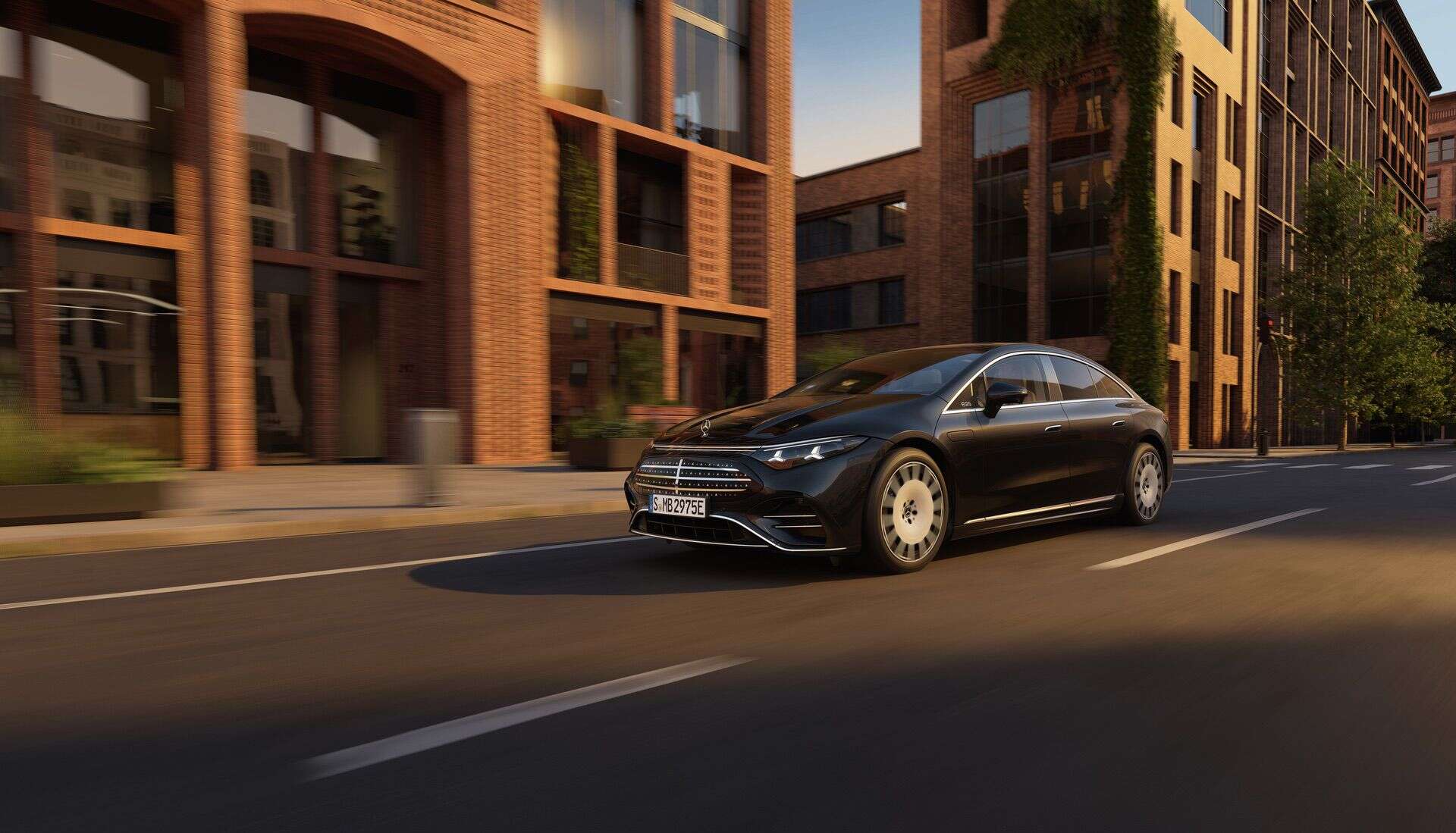
Mercedes-Benz has unveiled a heavily revised version of the EQS, its flagship electric sedan. According to the company, more than a quarter of the vehicle’s components have been updated, pointing to a much broader engineering revision than the usual grille and trim changes. The biggest change is underneath. The EQS moves from a 400-volt to an 800-volt electrical system, adopts the same underlying architecture used by the latest CLA, and introduces steer-by-wire technology. For a model that already served as a technology showcase within the Mercedes-Benz lineup, the 2026 EQS pushes further in that direction.
Up to 926 Kilometers of WLTP Range
The EQS 450+ is rated at up to 926 kilometers on the WLTP cycle, or about 575 miles. Mercedes says that represents a 13 percent increase over the previous version. In real-world terms, it means the EQS remains one of the longest-range luxury EVs on sale, at least on the European test cycle. That increase comes from several updates working together. Battery capacity rises from 118 to 122 kWh, while revised cell chemistry combines silicon oxide with graphite in the anode to improve energy density and further reduce cobalt content. Mercedes is also adding a new EQS 400 variant at the lower end of the range. It produces 270 kW and uses a 112-kWh battery. Pricing has not yet been announced.
800-Volt Charging and Drivetrain Changes

The shift to 800-volt hardware also changes the EQS’s charging performance. DC fast charging now tops out at 350 kW, with Mercedes claiming up to 320 kilometers of WLTP range can be added in 10 minutes under ideal conditions. At older 400-volt chargers, the battery can split into two virtual sections, with each half drawing up to 175 kW. That should help maintain decent charging performance even when newer high-voltage infrastructure is not available.
Mercedes has also increased regenerative braking output by roughly a third, to 385 kW. Another notable drivetrain change is a new two-speed rear transmission, with one ratio aimed at low-speed response and the other at highway efficiency. Rear-wheel-drive versions also gain a much higher towing capacity, now up to 1,600 kg. Bidirectional charging, including vehicle-to-home and vehicle-to-grid capability, is scheduled to arrive later through an over-the-air update.
Steer-by-Wire Arrives

One of the more notable additions is the optional steer-by-wire setup. Mercedes says the EQS will be the first German series-production car to offer it. Instead of a physical mechanical link between the steering wheel and the front wheels, inputs are transmitted electronically.
That allows the company to tune steering feel more freely, reduce unwanted vibrations, and use a flatter steering wheel design. As with any steer-by-wire system, redundancy is central to the concept. Mercedes says the EQS uses dual signal paths, while rear-axle steering and wheel-specific braking intervention provide backup support if needed. The feature will not be available immediately at launch but is expected shortly afterward.
MB.OS Becomes the Core Software Platform
The 2026 EQS also adopts Mercedes-Benz’s new MB.OS software architecture, which now manages everything from infotainment to drivetrain and driver-assistance functions. The platform is tied to the Mercedes-Benz Intelligent Cloud, allowing ongoing over-the-air updates after purchase.
The MBUX Virtual Assistant has been revised as well and now incorporates Microsoft AI for more conversational, multi-step voice interaction. Buyers will still get the MBUX Hyperscreen as standard, spanning more than 55 inches across the dashboard. Rear-seat passengers gain two 13.1-inch displays, updated handheld remotes, and support for video conferencing apps such as Microsoft Teams, Zoom, and Webex.
Driver-assistance features are handled through the MB.DRIVE system, which uses 27 sensors in total: 10 cameras, five radar sensors, and 12 ultrasonic sensors. Parking Assist has also been updated and can now detect diagonal parking spaces while operating at speeds up to 5 km/h.
Cabin and Equipment Updates

Inside, the changes are more incremental. The front seatbelts are now heated, reaching up to 44 degrees Celsius. Air filtration is handled by a 9.82-liter HEPA filter that Mercedes says captures 99.65 percent of particles. Buyers also get new anthracite open-pore poplar trim and, for the first time in the EQS, the option of a fully leather-free interior. Mercedes is also expanding personalization through its MANUFAKTUR Made to Measure program, with roughly 125 available paint colors.
The DIGITAL LIGHT headlamps have been upgraded to micro-LED technology. Mercedes says the new setup increases the illuminated field while reducing energy consumption, and the ULTRA RANGE high beam is rated for a reach of up to 600 meters.
More Than a Routine Update
Taken as a whole, the 2026 EQS looks closer to a major technical revision than a normal mid-cycle update. The move to 800 volts, the addition of steer-by-wire, the new MB.OS platform, and the large WLTP range figure all suggest Mercedes is trying to keep the EQS relevant in a segment that is becoming more competitive. That will matter in comparison with rivals such as the BMW i7 which also due for a facelift update this month.
[Photos: Mercedes-Benz Media]