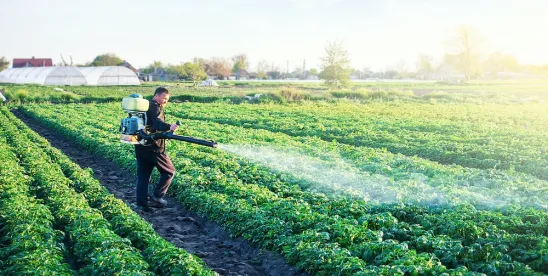
Most farmers did not get into farming because they dreamed of sitting across a table from an attorney. They got into farming because they love the land, because their families have worked it for generations, or because they are drawn to the independence and purpose that agriculture provides.
That independence is admirable, and it is deeply rooted in the culture of North Carolina’s agricultural community. But the world that surrounds today’s farm is not the same world it was a generation ago, and the legal landscape a modern farm operator must navigate has grown considerably more complex. The question is no longer whether a farmer can afford to have an attorney involved in the strategic management of their operation. Increasingly, the question is whether they can afford not to.
The Ground is Shifting — Literally
North Carolina is growing, and growing fast. The state added nearly a million people between 2010 and 2020, and projections suggest another 3.8 million will arrive by 2050, most of them settling in and around the state’s major urban corridors. That growth is a boon for many industries, but it has created enormous pressure on agricultural land. According to the American Farmland Trust, North Carolina ranks second in the nation, behind only Texas, for projected farmland loss, with an estimated 1.2 to 1.6 million acres at risk of conversion by 2040. Between 2012 and 2022, the state lost roughly 287,000 acres of farmland, and the losses were steepest in counties experiencing the most population growth. In Mecklenburg County alone, farm acreage dropped by more than 50 percent in a decade.
These are not just statistics for policy discussions. They represent real economic pressure on real farm families. As development encroaches, land values rise, not because farmland has become more productive, but because a developer sees a subdivision where a farmer sees soybeans. That dynamic creates a host of legal and financial decisions that no farmer should face without counsel. What is the land actually worth, and to whom? How should a farmer respond to an unsolicited purchase offer? What are the tax implications of a sale, a conservation easement, or a voluntary agricultural district designation? What happens when the county starts rezoning the land down the road and an operation that was once comfortably rural suddenly sits in the path of growth? How does all of this fit with the long term goals of the family?
These are the kinds of questions that an agribusiness attorney helps farmers think through, not reactively after a crisis, but strategically as part of managing the farm as a business.
Tend to Today, But Don’t Forget About Tomorrow
Farming has always demanded short-term focus. You plant, you tend, you harvest, and you manage whatever weather, pests, and markets throw at you along the way. But the farms that survive across generations are the ones that pair that seasonal discipline with a longer view. A strategic approach to farm management, the kind
that treats the operation as the closely held business it is, requires attention to legal structure, risk management, and planning that extends well beyond the current crop cycle.
Consider just a few of the areas where legal counsel adds value to a farm operation. Entity formation and governance: is the farm operating as a sole proprietorship, a partnership, an LLC, or a corporation, and does that structure still make sense given changes in the family, the operations, or the tax code? Contract review and negotiation: are lease agreements, supply contracts, and buyer relationships structured to protect the farmer’s interests and reflect the realities of the operation? Regulatory compliance: is the operation current on the environmental, labor, and land-use regulations that apply to its particular activities and its particular county? Revenue diversification: is the farm’s revenue stable, or should the operation look to incorporate other sources of income, such as agritourism? Insurance: does coverage actually match the risks the operation faces today, including the risks that come with inviting the public onto the farm?
That last two points deserve their own moment. Agritourism has become a vital revenue stream for North Carolina farms. Nearly a thousand farms in the state now generate income from recreational services and agritourism, and average revenue per farm from those activities has increased significantly in recent years. Agritourism encompasses everything from U-pick operations and farm-to-table dinners to corn mazes and educational tours, and it offers a meaningful path toward revenue diversification at a time when commodity prices alone may not sustain an operation. But agritourism also brings new legal exposure. Farms are inherently dangerous places, and visitors who have never set foot on a working farm often have no appreciation for that reality. North Carolina’s General Assembly has provided meaningful liability protections for agritourism professionals, but those protections come with specific compliance requirements, including posting a statutory warning, and they do not shield a farmer from liability arising from willful or wanton disregard for visitor safety. A farmer opening the gates to the public without understanding these nuances is taking on risk that can be managed but should not be ignored.
Keeping the Farm in the Family — and Keeping the Family Together
If there is one area where the absence of legal counsel inflicts the most damage, it is succession planning. For most farm families, the farm is not just their livelihood. It is their largest asset, their identity, and their legacy. Yet far too many farm operations have no succession plan at all, or have a plan that was put together years ago and no longer reflects the family’s circumstances.
The challenges are both financial and deeply personal. Who will lead the operation after the current generation steps back? What happens when some family members want to continue farming and others do not? How do you treat heirs fairly without carving the land into parcels that undermine its productive capacity? How should ownership and management transitions be structured to preserve the operation’s relationships with lenders, suppliers, and key employees? And how does a family accomplish all of this while managing the tax consequences that, without proper planning, can force a liquidation that no one wanted? Should the family keep the farm and, if not, how best to handle that?
These questions do not have one-size-fits-all answers. They require tailored legal work, often involving a combination of entity restructuring, estate planning, conservation easements, buy-sell agreements, and careful coordination among attorneys, accountants, and financial advisors. The cost of doing this work proactively is a fraction of the cost of the intra-family litigation, forced sales, and lost opportunities that result from failing to
plan. As one agricultural economist has put it, taxes do not destroy farms; families do. That is a hard truth, but it underscores why having an attorney who understands both the legal mechanics and the human dynamics of farm succession is so important.
Don’t Leave an Area Untended
The thread that runs through all of this is straightforward: modern farming is a sophisticated business operating in an environment of significant legal, regulatory, and economic complexity. Development pressure on farmland is not going away. Revenue diversification through agritourism, value-added products, and alternative crops demands new kinds of legal attention. Succession planning requires deliberate, ongoing engagement, not a single conversation. And the day-to-day disputes that arise in any business (contract disagreements, boundary issues, lease negotiations, insurance claims) benefit from the involvement of an attorney who understands the agricultural context in which those disputes arise.
An agribusiness attorney does not need to be involved in every day to day decision a farmer makes. But a farmer who has a trusted attorney as part of their team of trusted advisors, someone who knows the operation and understands the industry, is far better positioned to protect what they have built and to plan for what comes next.