SPONSORED CONTENT
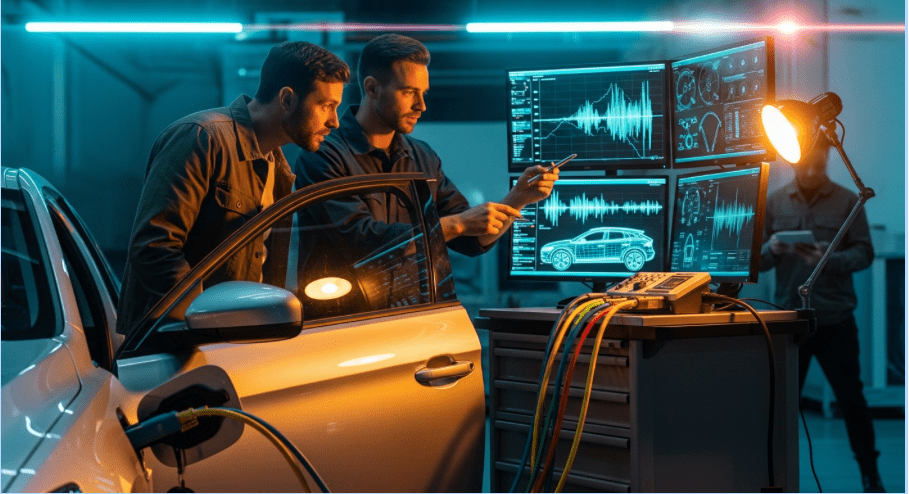
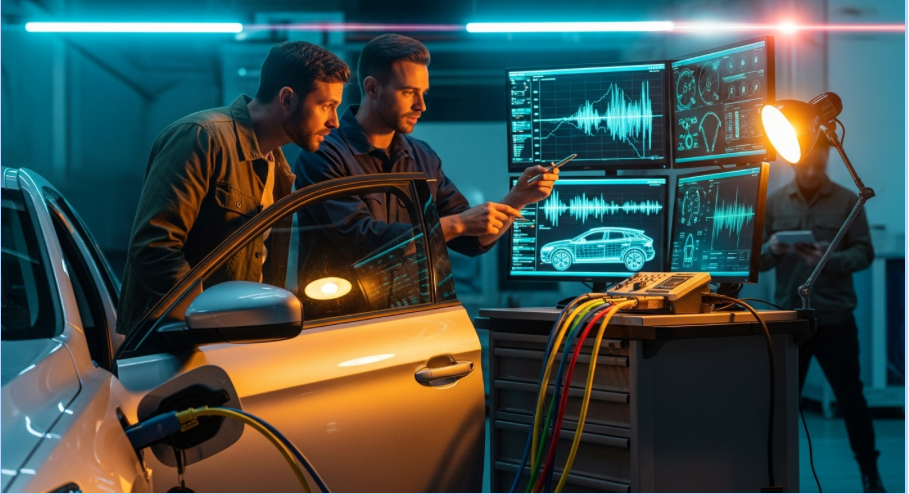
After a crash, most people think about bent sheet metal, police reports, and insurance photos. What a lot of drivers don’t realize is that modern vehicles leave behind a digital trail of evidence, including dashcam footage, GPS history, and app records. Those onboard computer modules can record exactly what your car was doing in the moments before impact.
In a 2025 model-year car, that digital evidence can range from airbag deployment timing to whether an emergency braking system attempted to intervene before a collision. Automakers are pouring money into these systems, driving the automotive safety market from $145.3 billion in 2023 toward a projected $443.4 billion by 2032. All of that data improves vehicle safety for everyone on the road, but it also raises real questions about access, privacy, and fairness once a wreck actually happens. And if you’ve ever wondered who gets to look at your car’s data after a collision, you’re not alone.
| Data Source | What It Usually Captures | How Long It May Last | Who May Access It | Why It Matters After a Crash |
|---|---|---|---|---|
| Event Data Recorder (EDR) | Short crash snapshot: speed, braking, seat belt use, airbags | Limited event-based record | Owner consent, investigators, experts, depending on law and circumstances | Helps reconstruct the final seconds before impact |
| ADAS/System Logs | Warnings, interventions, sensor status, system faults | Varies widely by system and brand | Often requires manufacturer tools or expert access | Shows whether safety systems warned or intervened |
| Connected Telematics / Cloud Data | Timestamps, location, service events, vehicle status, app-linked records | May persist longer, depending on provider | Automaker, service platform, sometimes owner by request | Can add context before and after the crash |
Your Car’s “Black Box” Is Only Part of the Story
What an Event Data Recorder Actually Does
An Event Data Recorder (EDR) is the device often called a vehicle’s “black box.” While around 96% of vehicles sold in the US and Canada since the late 1990s have come with some form of EDR, modern versions capture far more detail than their predecessors. It’s worth understanding that this module usually records a short snapshot surrounding a crash event, rather than functioning as a full-time recording device that logs every single trip you take.
The EDR stores roughly 5 seconds of data before and after a crash, capturing parameters such as vehicle speed, throttle position, and crash pulse severity. Think of it like a security camera that only saves the last few seconds of footage before a break-in. Just as a mechanic uses an OBD-II scanner to find out why exhaust tips turn black by reading combustion data, crash investigators use specialized tools to pull EDR impact logs.
Crash Telemetry Now Comes from Multiple Systems
Beyond the EDR, crash data now originates from advanced driver-assistance systems (ADAS) modules, radar sensors, telematics control units, and over-the-air connected services. NHTSA indicates that modern telematics can capture pre-crash vehicle inputs, restraint system usage, and post-collision information, as discussed in reporting on digital trailsvehicles leave after an accident. Picture the EDR as a single snapshot camera, while a connected vehicle is more like a network of devices, each leaving behind its own timestamps and system logs.
This network of cameras and sensors is quickly becoming a standard requirement for top safety marks. The data is sensitive enough that vehicles like the Tesla Model Y must now pass updated ADAS safety tests before earning modern safety certifications. If you’ve recently shopped for a new car, you’ve probably noticed how prominently manufacturers advertise their safety ratings; that’s partly because the bar keeps moving.
Why This Matters More in Newer Vehicles
As ADAS features become standard in 2025, investigators rely on digital logs to evaluate systems such as automatic emergency braking (AEB), lane-keeping, and hands-free highway assist. The data also supports claims that these systems genuinely improve safety. A comprehensive study found that AEB reduced front-to-rear crashes by 52% in 2021–2023 model-year vehicles.
That same research also found that pedestrian AEB systems showed a 9% reduction in single-vehicle frontal crashes involving non-motorists. Safety data helps confirm whether these active systems engaged appropriately during an actual incident, giving engineers useful feedback on sensor performance and helping them pinpoint where the technology still falls short.
What Vehicle Safety Data Can Reveal After a Crash
The Most Useful Data Points in a Collision Investigation
After an impact, experts look at specific parameters to reconstruct the timeline. According to NHTSA standards for EDRs, recorded variables include speed, steering, braking, acceleration, and seatbelt use. When specialists download a vehicle’s computer, here’s the kind of information they typically look for:
- Pre-crash speed (and whether it was steady or changing rapidly)
- Brake pedal application
- Throttle position
- Steering angle and steering corrections
- Seat belt use at the time of impact
- Delta-V, or the change in velocity during the crash
- Airbag deployment timing
- ADAS warning or intervention status (did the car try to help?)
- Stability control activity
- Post-impact vehicle movement
These parameters answer practical questions, such as: Did the driver brake? Was the car accelerating? Dashcam and diagnostic reports can complement these readings to show whether the driver attempted an evasive maneuver or whether an assistance system intervened on its own.
What the Data Can’t Tell You on Its Own
Digital logs won’t always show the full road environment, visibility conditions, weather, or driver intent. The National Transportation Safety Board has noted that measuring driver distraction is increasingly complex because multipurpose dashboard displays don’t leave a physical trace of where the driver was looking. Sound familiar? If you’ve ever glanced at your infotainment screen for “just a second,” you know how hard it’d be to prove what caught your attention.
Some records are brief snapshots rather than continuous logs, meaning they require interpretation by specialists. Missing data doesn’t automatically prove anything, either. Research into AI perception vulnerabilities shows that sensors can sometimes fail to register surrounding objects entirely, which means a blank log isn’t necessarily an alibi or an accusation.
Why Investigators Combine Digital and Traditional Evidence
Crash reconstruction typically relies on scene measurements, police reports, witness statements, roadway markings, and physical vehicle damage. But the toolkit is expanding; new technical evidence has been added to the average claim, pushing investigators to combine traditional evidence with onboard digital logs.
By merging digital and physical evidence, investigators get a much more complete picture of the crash event. Insurance companies are already reacting to this shift, with some developing AI claim systems that can resolve straightforward cases within minutes based on these combined data streams. That’s a significant change from the days when an adjuster would drive out, eyeball the dents, and make a call.
How Manufacturers and Safety Agencies Use Crash Telemetry
Improving the Next Generation of ADAS
Telemetry helps engineers learn when a safety system worked correctly, when it warned too late, or when drivers flat-out ignored alerts. For instance, the IIHS found that forward collision warning with AEB reduces rear-end crashes by 50%.
Automakers also analyze sensor data to refine other active safety features. IIHS data shows that blind-spot monitoring is associated with a 14% reduction in lane-change crashes, while lane departure warning reduces relevant injury crashes by 21%. Those numbers don’t happen by accident (no pun intended); they come from years of real-world data feeding back into engineering teams.
Why Connected-Car Data Is Becoming More Important
The broader connected safety ecosystem uses anonymized fleet data to warn drivers about hazards ahead of time. Bosch and BMW have implemented a cloud-based warning service that delivers real-time alerts about dangerous road conditions directly to millions of motorists.
These systems process vehicle-to-everything (V2X) communications to identify localized threats. That technology can alert drivers to hazard zones, including heavy rain with hydroplaning risk, black ice, and wrong-way drivers. If you’ve ever wished your car could warn you about a patch of ice around the next bend, this is exactly the kind of system that’s making that possible.
The Transparency Problem
More useful data doesn’t always mean easier access, because manufacturers often store critical records in proprietary cloud systems. In fact, the gap between responsibility and actual control of that data is exactly where major legal disputes are cropping up right now.
Public reporting on autonomous testing demonstrates how crash narratives can depend on who controls the records. After facing criticism over secrecy, Tesla released 17 Robotaxi crash reports that exposed teleoperation-related collisions and raised new safety concerns. Not exactly the transparency win the company was hoping for.
Who Owns the Data, and Can You Get It?
The Driver’s Rights Question
In the U.S., EDR ownership and access rules are shaped by a mix of federal and state law, owner consent, court orders, and specific crash circumstances. The Driver Privacy Act of 2015 mandated that event data recorder information is the vehicle owner’s property and generally requires the vehicle owner’s consent to extract it.
Despite those protections, many drivers remain completely unaware that their vehicle may be logging driving behavior in the background. Connected-car integrations also mean insurers are increasingly seeking access to driving-habit data. It’s a bit like discovering your employer has been tracking your keystrokes; the surprise often matters as much as the surveillance itself.
Why Getting the Data Can Be Harder Than People Expect
Accessing this information often requires specialized download tools, a trained technician, or a reconstruction expert, and some modules sustain physical damage in crashes, making extraction difficult or impossible. In the commercial vehicle sector, legal advocates stress the first 24 hours as the critical window to preserve black box evidence before it may be permanently overwritten by a truck’s engine control module.
Connected-car data may sit solely with the automaker or service provider rather than on a physical module inside the car. As data collection grows, analytics solutions are becoming critical for building robust audit trails that support insurance and liability claims. So if you’re assuming that you can just pop open a panel and pull the data yourself, think again.
Practical Steps to Take After a Crash
After an accident, you should request and preserve photos, save dashcam footage, and avoid deleting app or trip records. Your smartphone often becomes a repository for important post-crash information, including insurance communications and scene documentation.
Keep all repair and tow records, ask your insurer what digital evidence was collected, and check with the dealership about owner-access options for your vehicle’s onboard data. Also, documenting any ADAS warnings or malfunctions you noticed before the crash can be highly helpful if serious injuries or disputed fault are involved.
Why Crash Data Can Matter in Real-World Liability Disputes
When Telemetry Helps Tell the Fuller Story
Telemetry can resolve disputes when one driver says they braked, but the data suggests otherwise, or during multi-vehicle chain-reaction crashes where finger-pointing goes in every direction. Vehicle mass can also affect these readings. According to NHTSA data, every 1,000-pound decrease in vehicle weight corresponds to an approximate 4% reduction in front-to-rear crashes for AEB-equipped vehicles.
Questions involving defective tires, brake system allegations, ADAS engagement, and lane-change collisions can all rely heavily on digital logs. Understanding these variables matters because driver-technology interaction directly affects roadway safety and collision outcomes in ways that aren’t always intuitive from the outside.
How Legal Teams Use Crash Data
In serious crashes, digital vehicle records can become just as important as the photos from the scene. Law firms that handle high-stakes collision cases often work with accident reconstruction specialists, vehicle data experts, and technical records to determine whether a driver, a commercial operator, or even a defective vehicle component contributed to the wreck. Without quickly securing this data, vital telemetry can be overwritten or lost shortly after a collision.
For example, in a disputed Plantation car accident case, a legal team may look beyond witness statements and police notes to obtain EDR downloads, repair module logs, and other crash evidence before it disappears. Chalik & Chalik Injury and Accident Lawyers position this kind of technical evidence as part of building liability in serious Florida collisions, especially where catastrophic injuries, multiple parties, or possible product defects are involved.
That kind of support matters because crash data doesn’t explain itself. It has to be preserved quickly, interpreted correctly, and compared against physical evidence from the roadway and the vehicle itself. For you as a driver, the big takeaway is straightforward: if the fault is unclear and injuries are significant, digital evidence can be central to protecting your rights.
The Privacy Tradeoff Every Driver Should Understand
Safety Benefits Are Real
The real-world safety gains from this technology are substantial, resulting in lower crash rates for vehicles equipped with AEB, blind-spot monitoring, and lane-departure warning systems. Commercial applications are advancing rapidly, too, with some buses using ADAS with AI cameras to detect driver fatigue before it turns into a disaster.
Connected hazard warnings can alert drivers earlier than ever, and explosive growth in the safety market shows this technology is becoming standard rather than niche. As V2X communication enables real-time data sharing between vehicles and infrastructure, these localized safety networks will likely continue to expand across more regions and manufacturers.
But More Safety Data Also Means More Exposure
Privacy concerns are escalating as mobility programs and connected services demand more detailed tracking of how you drive, where you go, and how long you stay. In the United Kingdom, Motability withdrew tracking plans after making in-vehicle monitoring compulsory, drawing heavy criticism over privacy concerns from drivers who felt surveilled.
Sharing sensitive technical records can also create unintended consequences that threaten public trust in the systems themselves. Here’s a striking example: the NTSB shut down a public database after discovering that an image within it could be used to reconstruct audio from a cockpit voice recorder. That’s the kind of rabbit hole nobody anticipated when the data was first collected.
A Balanced Takeaway for Drivers
The smartest move you can make is to understand what your vehicle can record before you ever need that information. While the cost of this technology could increase as insurers push harder for data access, don’t panic about the presence of safety sensors. They’re there for a reason, and more often than not, they work in your favor.
Read your privacy policy and owner’s manual, and know where your automaker stores connected-service data. Treat your car as both a safety tool and a potential source of evidence, keeping in mind that digital records often become part of the broader accident investigation process. The technology isn’t going away; you’re better off knowing how it works now than scrambling to figure it out after a crash.